Sunday, September 13, 2015

Agenda for 9/14 (Maroon) and 9/15 (Gold)

1. Sociological Imagination Quiz

2. Using our Sociological Imagination to examine American football

A. Reactions from the end of the "most watched" Super Bowl in history.  

B. It's popular and profitable 

  • The NFL generated $9.5 billion in revenues in 2012 , some $2 billion more than Major League Baseball. The 32 teams themselves are worth more than $37 billion combined, according to Forbes
  • More than 25 million Americans played fantasy football last year, spending more than $3 billion  on league entry fees and other related content and services, including stuff like this.   
  • The NFL’s revenue includes $4 billion from television broadcast rights contracts with the likes of CBS, ESPN, Fox, NBC and satellite provider DirecTV.
  • 34% of fans who said that pro football was their favorite sport in a January poll by Harris Interactive , compared with 24 percent who chose pro football in 1985. Baseball was a distant second in the most recent poll, with 16 percent calling it their favorite. 
  • 17,303,347: Regular season attendance at NFL games in 2012, according to Sports Business Journal, up from 2011 but down from 17,605,811 in 2006. 
  • 17: Number of billionaires among the league’s 31 owners (with the Green Bay Packers being publicly owned )110,000: Approximate number of jobs across various industries supported by the NFL, according to a 2011 story by the Associated Press.
  •  $765 million: Amount the NFL agreed to pay over 20 years to settle a lawsuit brought by 4,500 former players who accused the league of concealing information it had about the long-term risks of concussions. The league did not admit to any wrongdoing in agreeing to the settlement, which must still be approved by a federal judge.
C. And we LOVE it! Football culture and kids ("American Football" - Radiolab excerpt. Listen from 0:45:00-1:05:00)

D. But is it safe? Listen to the "Youth Football Study" segment.


Assignment #3 - Football for Kids?

  • Part 1 - You've been asked to write a short article for the TA school newspaper about the dangers of football. Using the resources above, write a 200-300 word article explaining the dangers of football. In your article you must specifically cite evidence/arguments from all the three articles above. (not an opinion article)
  • Part 2 - Write a paragraph explaining your personal opinions on this issue. Specifically, if you would let your child play football before the age of 12 if they wanted to.


Wednesday, September 9, 2015

Agenda for 9/10 and 9/11

1. The "special" American problem of mass shootings.

2. What other social factors influence gun violence?

3. What do you think?


4. The effect of categories (and expectations)

  • Listen to Batman Pt. 1: 0:00-6:40 (and you should definitely listen to the rest because it's AWESOME!). You can also listen on Youtube here (0:00-7:17).
  • Read "Defined by Your Category"
  • Answer in you note: What does the rat example and article teach us about the influence of categories over human behavior?  
5. Practicing the Sociological Imagination:
  • Seeing the strange in the familiar?
  • Seeing the general in the particular?


 6. Connecting the Sociological Imagination to your life!

  • "This is Water" by David Foster Wallace
  • How do the ideas in this excerpt connect to the concept of the "Sociological Imagination." Think about the iceberg and the waterline of visibility.


HW

Be prepared for "Sociological Imagination Quiz" next class
  • Explain the three concepts in your own words
    • seeing beneath the waterline of visibility
    • Seeing the strange in the familiar
    • Seeing the general in the particular

Assignment #1 - Due: 9/14 (Maroon), 9/15 (Gold)

  • Answer the two questions below in a paragraph each.
  • Submit to eBackpack "Assignment #1"
1. What is the main point of Wallace's "This is Water" speech? 

2. What is the connection between his words and the "Sociological Imagination?" 

Respond in a paragraph each.
  • Below are excerpts from "This is Water" speech by David Foster Wallace.

"The only thing that's capital 'T' True is that you get to decide how you're going to try to see it. This, I submit, is the freedom of real education, of how to be well-adjusted. You get to decide what has meaning and what doesn't. That is real freedom. That is being educated and understanding how to think. The alternative is unconsciousness."
“Learning how to think" really means learning how to exercise some control over how and what you think. It means being conscious and aware enough to choose what you pay attention to and to choose how you construct meaning from experience. Because if you cannot or will not exercise this kind of choice in adult life, you will be totally hosed.”

Monday, September 7, 2015

Agenda for 9/9 - Gold

1. Finish Intro to Sociology keynote

2. In notability: create a new folder, title it "Sociology," and then create a new note.

3. Developing the Sociological Imagination:

"SEEING THE GENERAL IN THE PARTICULAR"

Disney Ad Analysis

In your notability note answer the following questions as best as you can (write down whatever comes to mind :

A. What aspects of American culture/values are evident in this Disney ad? What ideas does it support? How does it reflect they way Americans think about life? Think about sex and gender, masculinity and femininity, body image, race, socioeconomic class, childhood.

B. Think about which group in society this ad is meant to target? Do you have any concerns about companies designing ads to target this group?


"SEEING THE STRANGE IN THE FAMILIAR"

4. The "Rat" Experiment" - the effect of categories (and expectations)
  • Listen to 0:00-7:17 (and you should definitely listen to the rest because it's AWESOME!).
  • Answer in you note: What does the rat example and article teach us about the influence of categories over human behavior?  
  • Read "Defined by Your Category"
5. Connecting the Sociological Imagination to your life!
  • "This is Water" by David Foster Wallace
  • How do the ideas in this excerpt connect to the concept of the "Sociological Imagination." Think about the iceberg and the waterline of visibility.

HW:

Assignment #1 - Due: 9/10
  • Answer the two questions below in a paragraph each.
  • Submit to eBackpack "Assignment #1"
1. What is the main point of Wallace's "This is Water" speech? 

2. What is the connection between his words and the "Sociological Imagination?" 

Respond in a paragraph each.
  • Below are excerpts from "This is Water" speech by David Foster Wallace.

"The only thing that's capital 'T' True is that you get to decide how you're going to try to see it. This, I submit, is the freedom of real education, of how to be well-adjusted. You get to decide what has meaning and what doesn't. That is real freedom. That is being educated and understanding how to think. The alternative is unconsciousness."
“Learning how to think" really means learning how to exercise some control over how and what you think. It means being conscious and aware enough to choose what you pay attention to and to choose how you construct meaning from experience. Because if you cannot or will not exercise this kind of choice in adult life, you will be totally hosed.”

Wednesday, September 2, 2015

Agenda for 9/3 - Gold

1. Intro to Mr. Parise
 
2. Intro to YOU!
 
3. Values of the class. Rules for the class.
 
4. Introduction to Sociology - keynote

Saturday, August 29, 2015

Agenda for 9/2 - Maroon

1. Intro to Mr. Parise
 
2. Intro to YOU!
 
3. Values of the class. Rules for the class.
 
4. Introduction to Sociology - keynote


Friday, June 12, 2015

Agenda for 6/12

1. The history of race in America.

2. So, race may not be real, but the effects of race certainly are:
 
3. Stereotypes 
  • What are stereotypes? Why stereotypes?
  • Physical stereotypes?  
  • What stereotypes must black men endure? 
    • What was the message of this skit?

4. Maybe these effects are the result of "white privilege?"
"White privilege refers to the unearned advantages that whites receive because of their skin color. It includes a vast array of concrete advantages varying from institutional settings (systemic discrimination in housing markets) to everyday encounters (e.g. being able to shop in a store without getting followed). They provide a variety of social and economic benefits, and can be cashed in, to confer greater power, authority, and status upon whites. But as Peggy McIntosh argues in 'White Privilege: Unpacking the Invisible Knapsack,' these privileges are usually invisible to people who benefit from."
5. White privilege = white as the normal/regular and nonwhite as a foreign "other." 
6. White have also been privileged in the ability to buy homes through various government programs that worked to deny home ownership to blacks for many decades.


  7. Here are more subtle, and less obvious, examples of white privilege.

  • Read through the examples of white privilege, individually.
  • Choose the five examples that you think are the most beneficial to white people.

   
HW: Assignment #27 - The White Privilege Assignment - due Tues. 6/16
Imagine that you are a 34 year old African American single woman with a young child. You have just met this gorgeous man who has asked you for a date in two days. You really want to make an impression on him so you intend to go to a grocery store to buy a few things that you will need to get ready for your date. While you are in the kitchen, trying to write your shopping list, making supper, and watching your 6 year-old daughter, you somehow manage to cut your finger. You use the last bandage you have at home and add "bandages" to your shopping list. Your shopping list now lists the following items:

  • Bandages
  • Silk stockings
  • Blemish cover/Make-up
  • Book and toy for 6 year old daughter
  • Fashion magazine for fashion and beauty tips
  • Romance novel for entertainment in case the date doesn't work out
  • Birthday card for your best friend (an African American woman who'll turn 40 in a few days)
Because you are African American, you want to make sure that you buy bandages, silk stockings, and blemish cover/make-up in a color that matches your skin color. Similarly, you will buy a fashion magazine created for an African American audience that gives beauty and fashion tips to African American women. Also, you feel that your daughter should develop a strong African American identity, so you intend to buy a children's book and a toy that feature pictures/stories/etc. of other African American children. Because your friend is an African American woman, you'll buy a humorous birthday card, featuring African American cartoon figures. Finally, in case things don't work out with the date, you want to read a romance novel written by an African American author featuring African American people.

Go to a grocery, department, or drug store and try to find the articles listed on the shopping list. Do not buy the products, just to try to find them.

After your shopping experience, answer the following questions:

1. Were you able to find all the items listed on the shopping list? Which items did you find? Which ones were you not able to find?

2. If you found items from the shopping list, how did they compare in price to comparable products for European American customers?

3. If you found items from the shopping list, how many different companies or manufacturers (e.g., Almay, Cover Girl, and Revlon) produced African American products, and how many different companies/manufacturers produced comparable products for European American customers? In other words, would you be able to choose from a number of different products?

4. Assuming that you, as an African American woman, encountered some difficulties in deciding on certain beauty products (e.g., making decisions regarding the best color of blemish cover to use), whom in the store would you ask for help? Is there an African American sales person around? Are there other African American women in the store that might be able to advise you?

5. If you were to encounter problems with one of the sales people and you wanted to talk to the manager, who would the manager be, an African American man or woman or a European American man or woman?

6. Having answered these questions, how do you as an African American woman feel?

Tuesday, June 9, 2015

Agenda for 6/10 and 6/11

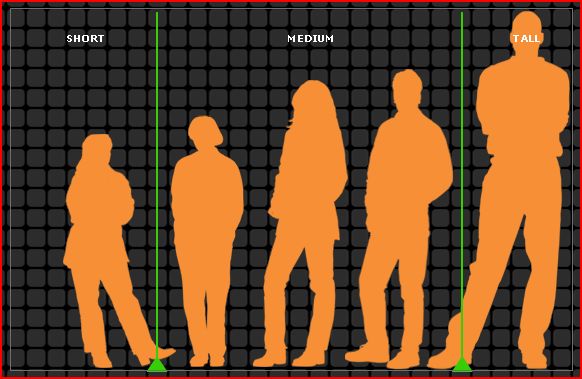
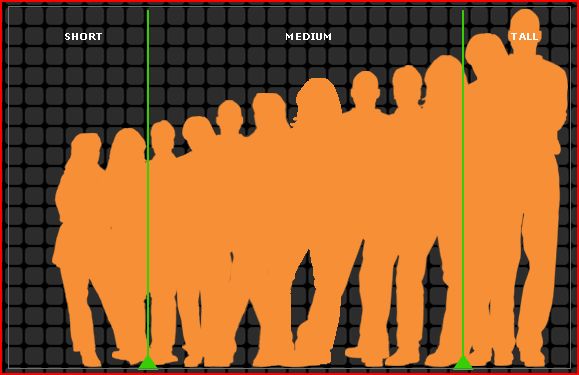
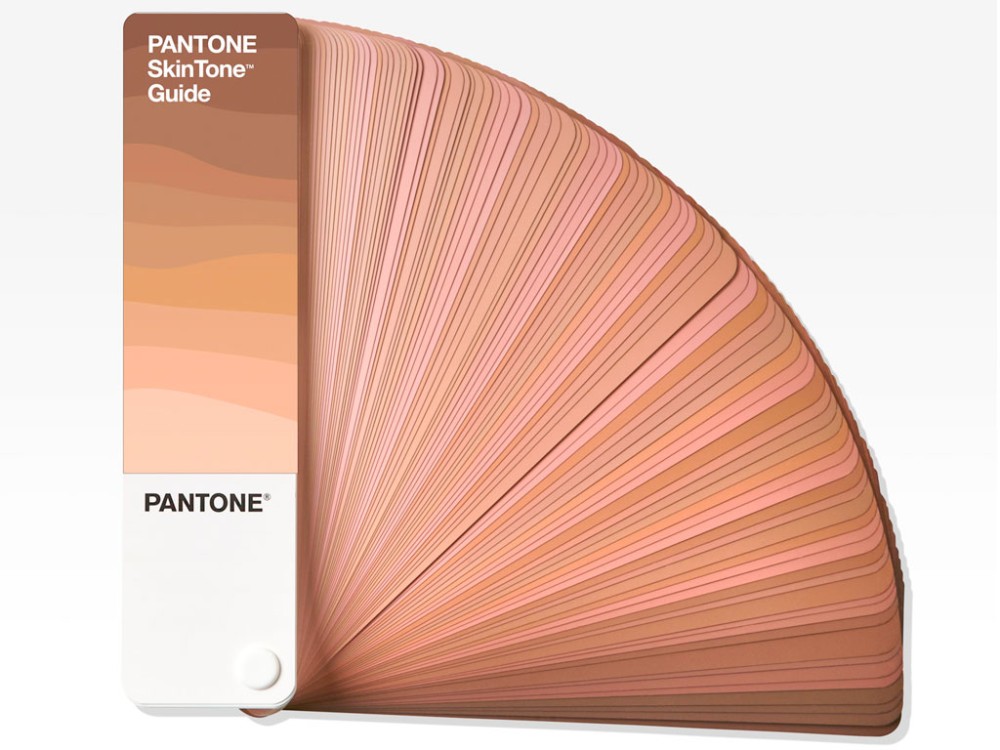
Like height, race (skin color) is a spectrum. Where you draw the line is arbitrary.

Where does white end and black begin?


1. Is it hard to talk about race? The "difficult conversation" about race. 
  • Do you agree? 
  • Is it difficult to talk about race? 
  • Why is it difficult for some to talk about race?
2. Big/Essential Idea - "Race is a social construction" (video 1, video 2)
  • How do we determine a person's race? Physical characteristics? How well can YOU identify a person's race from physical characteristics?
  • The "myth" of race.
  • How is this idea different from how most people think about race? 
  • The history of race in America.
3. How does race impact the lives of people in America?
  •  Stereotyping: 
    • What are stereotypes? Why stereotypes?
    • Physical stereotypes?  
    • What stereotypes must black men endure? 
      • What was the message of this skit?