Monday, March 30, 2015

Agenda for 3/31 and 4/1


*Review HW

1. Are girls closing the "Gender Gap?"

So what might be some of the effects of a media that regularly show women as passive, subordinate, powerless, dependent, sexualized (seen only as sexual objects), and sexually vulnerable?

2. Back to advertising...What is the hidden message of this ad for Axe body spray? Or this one?

3. And this music video?

4. So should we be surprised this happens?

5. Or that some in the news media react this way?

6. Or even worse, like this...

7. Do we live in a "Rape Culture?"


8. Rape Culture 101 - below is an excerpt from the article

"Rape culture is 1 in 6 women being sexually assaulted in their lifetimes. Rape culture is not even talking about the reality that many women are sexually assaulted multiple times in their lives. Rape culture is the way in which the constant threat of sexual assault affects women's daily movements. Rape culture is telling girls and women to be careful about what you wear, how you wear it, how you carry yourself, where you walk, when you walk there, with whom you walk, whom you trust, what you do, where you do it, with whom you do it, what you drink, how much you drink, whether you make eye contact, if you're alone, if you're with a stranger, if you're in a group, if you're in a group of strangers, if it's dark, if the area is unfamiliar, if you're carrying something, how you carry it, what kind of shoes you're wearing in case you have to run, what kind of purse you carry, what jewelry you wear, what time it is, what street it is, what environment it is, how many people you sleep with, what kind of people you sleep with, who your friends are, to whom you give your number, who's around when the delivery guy comes, to get an apartment where you can see who's at the door before they can see you, to check before you open the door to the delivery guy, to own a dog or a dog-sound-making machine, to get a roommate, to take self-defense, to always be alert always pay attention always watch your back always be aware of your surroundings and never let your guard down for a moment lest you be sexually assaulted and if you are and didn't follow all the rules it's your fault.

Rape culture is victim-blaming. Rape culture is a judge blaming a child for her own rape. Rape culture is a minister blaming his child victims. Rape culture is accusing a child of enjoying being held hostage, raped, and tortured. Rape culture is spending enormous amounts of time finding any reason at all that a victim can be blamed for hir own rape.

Rape culture is judges banning the use of the word rape in the courtroom. Rape culture is the media using euphemisms for sexual assault. Rape culture is stories about rape being featured in the Odd News.

Rape culture is tasking victims with the burden of rape prevention. Rape culture is encouraging women to take self-defense as though that is the only solution required to preventing rape. Rape culture is admonishing women to "learn common sense" or "be more responsible" or "be aware of barroom risks" or "avoid these places" or "don't dress this way," and failing to admonish men to not rape.

Rape culture is "nothing" being the most frequent answer to a question about what people have been formally taught about rape."


Friday, March 27, 2015

Agenda for 3/27 and 3/30

1. Apple and Facebook Will Now Pay for Employees to Freeze Their Eggs

2. Sarah Silverman’s rape tips for men really annoyed a lot of men

3. Continue/Finish - "The Codes of Gender" (click link for streaming version of the documentary)

4. Assignment #13 - upload your "Gender Codes T-Chart"

HW - Assignment #14

 Find 4 advertisements

1. One that demonstrates at least 2 feminine gender codes

2. One that demonstrates at least 2 masculine gender codes

3. One that defies traditional feminine gender codes

4. One that defies traditional masculine gender codes

For each advertisement, provide analysis as to why you chose that photo and how it meets the requirements above.

- Complete using Notability: easiest app for adding images and text. 

- To add image, add your image to your photo album and then add image by pressing the + sign at the top right of the screen.

- To add text click on the "Add a Caption..."option that appears at the bottom of the image after it is added to the note.

- When done upload to eBackpack "Assignment #14"

Monday, March 23, 2015

Agenda for 3/23 and 3/24


1. Transgender - "Raising Ryland" - When your young daughter says 'I'm a boy'. Historic court case in Maine for transgender students.

2. Gender Fluidity -  Paige's Story (7:00-17:00)

3. Assignment #11 (in class) - Gender in Advertising
  • Find an advertisement that exemplifies traditional masculine characteristics. List the characteristics that are present in your advertisement.
  • Find an advertisement that exemplifies traditional feminine characteristics.
    List the characteristics that are present in your advertisement.
4.  Traditional Gender Stereotypes

5. Assignment # 12. Kids clothing and toys and the Gender Binary

Toys R' US 
Babies R' US

  • Take a look through the offering for girls and boys toys or clothes. 
  • Complete the "Gender Socialization" handout as you investigate. 
  • After completing the handout answer the following reflection questions and submit through eBackpack "Assignment 12."
1. What kinds of things do you think clothes and toys teach children about gender? How do they teach them to be a boy or a girl?   

2. Based on your findings with respect to clothing and toys, what does it mean to be a boy or a girl? What kinds of messages do clothes and toys provide children about what it means to be a boy or a girl? In other words, what do boys and girls look like, act like, enjoy doing, and so forth? 

3. Are there any ways in which toys and clothing encourage girls and boys to be similar to each other? Explain.

4. Gender, in our society, is a basis for inequality—for assigning people different roles, rewards, responsibilities, and so forth. Discuss how children’s toys and clothing can perpetuate (maintain) this form of inequality.

5. Do you think parents realize what kinds of effects the toys and clothes they buy for their children can have on them? Will the findings from this activity influence the toys and clothes you buy for the children in your life?  


Thursday, March 19, 2015

Agenda for 3/19 and 3/20

1. Chris Borland Retirement A Shock To NFL

2. Test #1

3. "This is What Intersex Means"

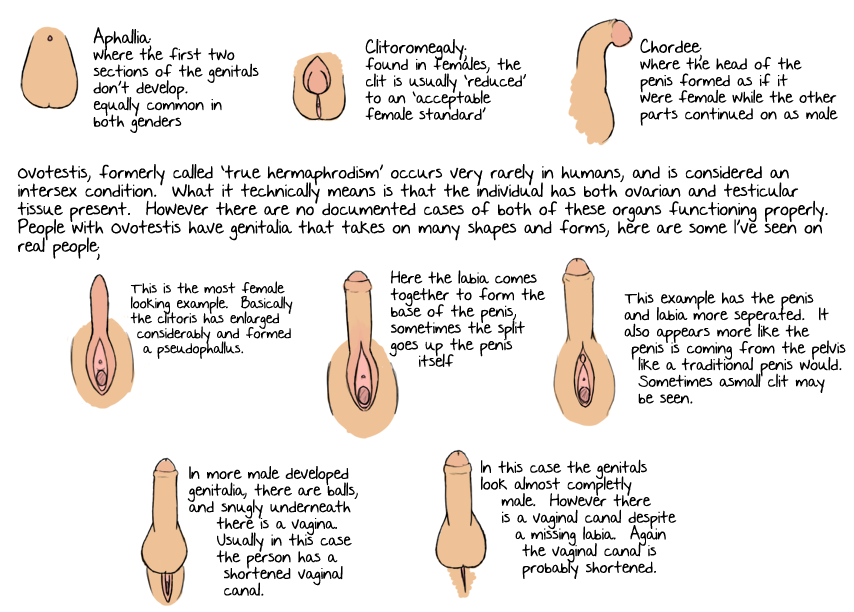
4. What are some examples of intersex conditions? 

5. How is anatomy "measured" at birth?


5. "Should we 'fix' Intersex Children?"

6. "Raising Ryland" - When your young daughter says 'I'm a boy'

Monday, March 16, 2015

Agenda for 3/17 and

1. Review for "Test #1" on Thursday 319

Terms/Concepts that you NEED to know/understand:

A. Sociological Imagination

  • Strange in the familiar
  • General in the particular
  • Beneath the waterline of visibility


  • material culture
  • nonmaterial culture

(Thanks Ashley!)


  • You will need to identify/describe at least 4 agents of socialization

G. Prussian Blue (link to the documentary)

  • Changes in them from childhood to adulthood
  • Their influences
2. The Leadership Gap between Men and Women - Statistics

3. How long will it take to close the Gender "wage gap"?

4. Huggies Advertisement

5. The Gender Binary

6. The Gender Spectrum

5.  Paige's Story (7:00-17:00)

6. Gender Terminology

Biological/Anatomical Sex: The physical structure of one’s reproductive organs that is used to assign sex at birth. Biological sex is determined by chromosomes (XX for females; XY for males); hormones (estrogen/progesterone for females, testosterone for males); and internal and external genitalia (vulva, clitoris, vagina for assigned females, penis and testicles for assigned males). Given the potential variation in all of these, biological sex must be seen as a spectrum or range of possibilities rather than a binary set of two options.

Gender Identity. One’s innermost concept of self as male or female or both or neither—how individuals perceive themselves and what they call themselves. One’s gender identity can be the same or different than the sex assigned at birth. Individuals are conscious of this between the ages 18 months and 3 years. Most people develop a gender identity that matches their biological sex. For some, however, their gender identity is different from their biological or assigned sex. Some of these individuals choose to socially, hormonally and/or surgically change their sex to more fully match their gender identity.

Gender Expression. Refers to the ways in which people externally communicate their gender identity to others through behavior, clothing, haircut, voice, and other forms of presentation. Gender expression also works the other way as people assign gender to others based on their appearance, mannerisms, and other gendered characteristics. Sometimes, transgender people seek to match their physical expression with their gender identity, rather than their birth-assigned sex. Gender expression should not be viewed as an indication of sexual orientation.
 
Gender Role. This is the set of roles, activities, expectations and behaviors assigned to females and males by society. Our culture recognizes two basic gender roles: Masculine (having the qualities attributed to males) and feminine (having the qualities attributed to females). People who step out of their socially assigned gender roles are sometimes referred to as transgender. Other cultures have three or more gender roles.

Transgender. 
Sometimes used as an umbrella to describe anyone whose identity or behavior falls outside of stereotypical gender norms. More narrowly defined, it refers to an individual whose gender identity does not match their assigned birth gender. Being transgender does not imply any specific sexual orientation (attraction to people of a specific gender.) Therefore, transgender people may additionally identify with a variety of other sexual identities as well.

Sexual Orientation. 
Term that refers to being romantically or sexually attracted to people of a specific gender. Our sexual orientation and our gender identity are separate, distinct parts of our overall identity. Although a child may not yet be aware of their sexual orientation, they usually have a strong sense of their gender identity.


Gender Normative/Cisgender. Refers to people whose sex assignment at birth corresponds to their gender identity and expression.

Gender Fluidity. Gender fluidity conveys a wider, more flexible range of gender expression, with interests and behaviors that may even change from day to day. Gender fluid children do not feel confined by restrictive boundaries of stereotypical expectations of girls or boys. In other words, a child may feel they are a girl some days and a boy on others, or possibly feel that neither term describes them accurately.

HW - Study for test on Thursday 

Sunday, March 15, 2015

Agenda for 3/16

1. Ferguson’s True Criminals - The city’s police, city, and courts unjustly targeted blacks with a violation of their most basic rights.
 
2. Read Children's Books
 
3. Leadership Characteristics Activity
 
4. The Leadership Gap - Statistics (report by The Center for American Progress)

5. How long will it take to close the "wage gap"?
 
HW - Prepare for "Test #1" on Friday 3/20

Terms/Concepts that you NEED to know:


A. Sociological Imagination

  • Strange in the familiar
  • General in the particular
  • Beneath the waterline of visibility


  • material culture
  • nonmaterial culture


  • You will need to idenitfy/describe at least 4 agents of socialization

G. Prussian Blue (link to the documentary)

  • Changes in them from childhood to adulthood
  • Their influences