Monday, January 5, 2015

Agenda for 1/6 - Gold

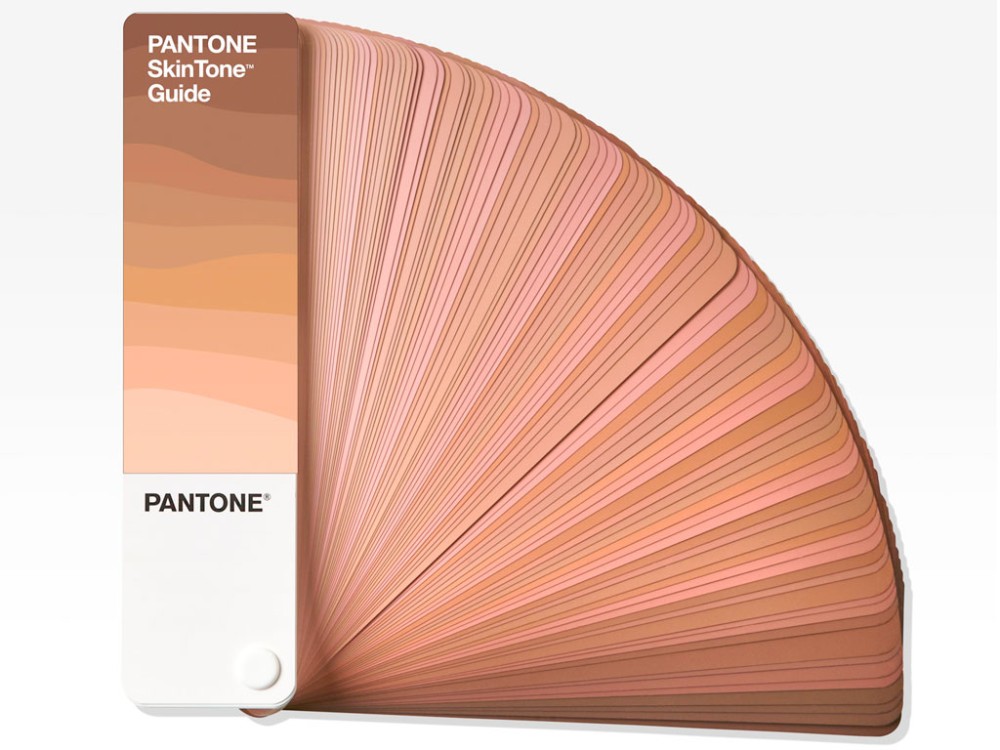
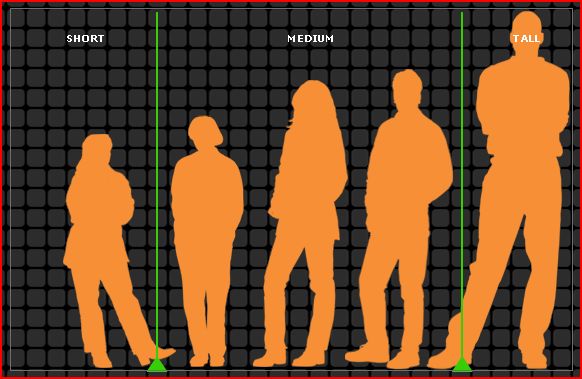
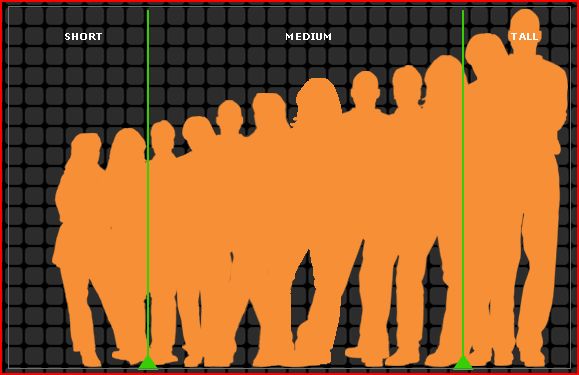
Like height, race (skin color) is a spectrum. Where you draw the line is arbitrary.

Where does white end and black begin?
1. The "difficult conversation" about Race...?

2. If race is a social construction, can we just make a new race in America? The US Census reveals history of U.S. racial identity

3. So if race is a social construction (created and perpetuated by society), so are our ideas (stereotypes) about people of different races. What stereotypes must black men endure?

4. Race - Keynote
5. "Race" may not be a biological reality, but what about "white privilege"...a media analysis of the concept.

Agenda for 1/5 - Maroon

Like height, race (skin color) is a spectrum. Where you draw the line is arbitrary.

Where does white end and black begin?
1. Race - Keynote (PDF of Keynote from class)

HW - Assignment #17

Tuesday, December 16, 2014

Agenda for 12/17

1. "A Long History of Racial Preference - for Whites"

2. Race - The Power of an Illusion


Open eBackpack Assignment #17


3.  Essential Viewing (videos and links from class):


HW - Finish Assignment #17 (eBackpack)


Agenda for 12/16


1. Santa Claus Should Not Be a White Man Anymore

2. The response to this "controversial" statement 


3. In Holland, Santa Doesn’t Have Elves. He Has Slaves.

4. Learning racial preferences at a young age - The Doll Test

So we learn to group people by race from a young age. But are we actually any good at it?

5. The "Sorting People" Activity

Sunday, December 14, 2014

Agenda for 12/15


1. Santa Claus Should Not Be a White Man Anymore

2. The response to this "controversial" statement 


3. In Holland, Santa Doesn’t Have Elves. He Has Slaves.

4. Learning racial preferences at a young age - The Doll Test

So we learn to group people by race from a young age. But are we actually any good at it?

5. The "Sorting People" Activity

Friday, December 12, 2014

Agenda for 12/12


1. Bill O'Reilly - "President Obama and the Race Problem"

2. FBI 2010 National Crime Statistics - who really commits more crime?

3. #CrimingWhileWhite 

4. The "Affluenza" Defense - white (rich) privilege?

5. Which policing policies and strategies target blacks and minorities? Stop and frisk.

6. Stop and Frisk Data - visualized

7. A "Stop and Frisk" victim?

8. The Stop and Frisk Debate - NY Times

HW - Assignment #16 - Stop and Frisk (eBackpack)
  • Visit the websites and videos about "Stop and Frisk" above and then answer the following questions.
1. Define "Stop and Frisk" as used by the NYPD

2. What are the primary arguments in support of "Stop and Frisk?" Provide at least three pieces of specific data that supports the policy.

3. What are the primary arguments against "Stop and Frisk." Provide at least three specific pieces of evidence to support arguments against the policy.

4. What is your opinion of the policy?
  • Which arguments are most convincing to you?
  • If you agree that it should be used, what would you say to a law-abiding New Yorker who is stopped 5-7 times a year for no other reason that the color of his skin and the neighborhood in which he lives?
  • If you disagree with the process, what would you say to those people who live in dangerous areas of NYC and are desperate for the police to be as active as possible in preventing violent crime?
5. Do you think the policy would have the support it does if 87% of the people stopped were white instead of Black and Latino?
Wednesday, December 10, 2014

Agenda for 12/11

1. CIA Torture Report

2. The "Affluenza" Defense - white (rich) privilege?

3. Which policing policies and strategies target blacks and minorities? Stop and frisk.

4. Stop and Frisk Data - visualized

5. A "Stop and Frisk" victim?

6. The Stop and Frisk Debate - NY Times

HW - Assignment #16 - Stop and Frisk (eBackpack)
  • Visit the websites and videos about "Stop and Frisk" above and then answer the following questions.
1. Define "Stop and Frisk" as used by the NYPD

2. What are the primary arguments in support of "Stop and Frisk?" Provide at least three pieces of specific data that supports the policy.

3. What are the primary arguments against "Stop and Frisk." Provide at least three specific pieces of evidence to support arguments against the policy.

4. What is your opinion of the policy?
  • Which arguments are most convincing to you?
  • If you agree that it should be used, what would you say to a law-abiding New Yorker who is stopped 5-7 times a year for no other reason that the color of his skin and the neighborhood in which he lives?
  • If you disagree with the process, what would you say to those people who live in dangerous areas of NYC and are desperate for the police to be as active as possible in preventing violent crime?
5. Do you think the policy would have the support it does if 87% of the people stopped were white instead of Black and Latino?